
Did you know? You can help pets at LHS with no (or very small) personal financial impact!

Author: Wendy King, Director of Finance and Administration

How to make a difference for homeless pets during your regular routine activities!

"Did you know" Lynchburg Humane Society logo, a green dog icon that has a confused head tilt

There are plenty of ways to give back at the Lynchburg Humane Society that are easy, possibly fall into your regular routines, and cost no or very little money! We are so lucky to have so many resources that our community members use that support the pets here at LHS. Here they are below:

Kroger Community Rewards linked to your Kroger plus card

The Kroger Family of Companies is committed to community engagement, positive social impact and charitable giving at the national and local levels. Every community is unique, but their common goal is to partner with the neighborhoods they serve and help the people there live healthier lives.

One of the ways in which they do this is through the Kroger Community Rewards program. This program makes fundraising easy by donating to local organizations based on the shopping you do every day. Once you link your Card to an organization, all you have to do is shop at Kroger and swipe your Shopper’s Card. Visit Kroger’s site to see how it works

Wooftrax

WoofTrax is a year-round fundraising app. It promotes healthy interaction between dogs and their owners while raising money to support a shelter or rescue. Every time you take your pup for a walk with Wooftrax, it can support LHS!

Using the WoofTrax app is easy. After setting it up on your smartphone, press the Start Walking button to log your walk. The more you walk your dog, the more you earn for your favorite animal charity.  Find out more at wooftrax.com

Don’t have a dog?  That’s okay!  There are several options: 

  1. You can register to “Walk Lexi” this means that you are a volunteer walker for a shelter.  Visit our page to become a dog walker! 
  2. Create a “dream dog” and walk your imaginary companion
  3. Did you have a dog that passed away?  You can walk in memory or honor of your treasured pet. 

Best Friends ResQwalk

ResQwalk is a free mobile app that lets you raise money and resources for your favorite animal welfare organization! This app does not require the registration of a pet and can be used during any distance related activity where you are moving less than 14 miles an hour.  

LHS is in the process of becoming a ResQwalk partner.  Please check back if you don’t see us listed in the participating organizations.

For more information check out Best Friends Org ResQwalk FAQ page.

As our friends at Best Friends say, “Strut your Mutt!”

Donate used bedding and towels

We understand that not everyone has the financial means to donate and that everyone is busy.  Do you have a linen closet that is bulging at the seams?  We are always in need of towels and bedding.  We can use towels, sheets and any size comforter to make our kennels more comfortable for both cats and dogs. 

Chewy Gives Back

Create a new account with Chewy.com to order pet supplies for your own pet or donate from our wishlist.  When you complete your first checkout, make sure to choose Lynchburg Humane Society when asked if you were referred or “how did you hear about us.”  LHS will receive referral commission from this! 

Walmart Spark Good Round up

Customers shopping on Walmart.com or in the Walmart app can now round up their totals at the point of purchase to the nearest dollar and have the change donated to a charity they choose. It’s super easy. When a Walmart customer shops on a mobile phone or computer, they will be prompted to choose a charity to donate to or decline the opportunity. The customer’s charity of choice must be enrolled in Round Up to participate. Click here and scroll to  

To get started on Walmart.com, follow these steps:

  • STEP 1: Visit walmart.com/sparkgood and sign in to your Walmart.com account 
  • STEP 2: Search for a favorite charity. 
  • STEP 3: Once you choose a charity, go to the Round Up box and click “Select this Charity” 
  • STEP 4: Review the FAQs and the Terms of Use  
  • STEP 5: Start rounding up to this charity every time you shop.  
  • STEP 6: Tell others about Round Up. Help promote a fundraising or awareness event your favorite nonprofit is hosting in front of a Walmart or Sam’s Club facility.

Employer Matching Programs

Maybe you can spare $5.00 a paycheck—the kind of sum that might otherwise go toward small indulgences like a morning coffee or trying your luck on offshore betting sites. Every penny we receive goes straight to the care of pets, making a real difference in their lives. If your employer matches your donations, all the better! Check with your Payroll or HR department to see if they participate.


We appreciate every single donation that comes to us no matter how big or small!  We can not survive without donations from the community. Without you we would not be able to continue to provide services to the community and help the pets.
Did you know? The Lynchburg Humane Society employs 60 people!

Author: Wendy King, Director of Finance and Administration

"Did you know" Lynchburg Humane Society logo, a green dog icon that has a confused head tilt

Who works at the Lynchburg Humane Society?

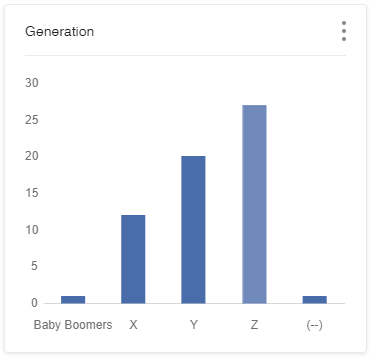
We are excited to have a robust workforce ranging from 18 years of age to 64 at our Center for Pets and Spay Neuter Clinic! Thirty percent of our employees are considered part-time working less than 28 hours a week. Our largest generational pool is Gen Z with that also being the largest group of part-time employees.  

Creating a thriving work environment is more than just hiring a diverse team—it requires intentional effort to foster engagement, communication, and shared values. Continuous work culture improvement is essential to ensure employees feel valued, supported, and motivated to contribute their best. This involves setting clear expectations, providing development opportunities, and encouraging open feedback. By regularly measuring changes in company culture, leadership can identify what strategies are effective, where gaps exist, and how to tailor initiatives that strengthen collaboration, morale, and overall workplace satisfaction. Investing in this process not only benefits employees but also drives the long-term success and reputation of the clinic.

Understanding the balance between productivity and employee wellbeing is key to sustaining a healthy work environment. Many organizations focus on output without considering how work hours and scheduling impact energy levels, concentration, and team dynamics. Taking time to evaluate workloads and monitor how time is spent throughout the day can reveal patterns that influence motivation and performance.

It’s often in these small details that opportunities for improvement emerge—like adjusting shift patterns, implementing flexible hours, or creating dedicated focus times. Even something as simple as understanding how many hours is 8:30 to 4:30 can help managers plan workloads more effectively, ensuring that productivity aligns with employee capacity rather than pushing for unnecessary overtime. A workplace that values time management not only increases efficiency but also reduces burnout. Encouraging employees to use available tools that help track time gaps and project durations promotes accountability and balance.

Leaders who regularly assess culture, gather feedback, and make data-informed adjustments not only improve collaboration and job satisfaction but also strengthen the long-term resilience of their organization, creating a workplace where employees feel motivated, supported, and empowered to contribute meaningfully.

In achieving these outcomes, strategic guidance and leadership coaching can play a critical role in amplifying organizational success. Integrating expertise that focuses on leadership development, team dynamics, and performance alignment enhances the ability of managers to implement sustainable practices. Teresa Duke Consulting provides tools and insights that help leaders cultivate effective communication, build trust, and foster accountability within their teams. By applying these principles alongside thoughtful scheduling, workload management, and engagement strategies, organizations can achieve a balance where both employees and the business thrive.

This holistic approach ensures that productivity, culture, and employee satisfaction reinforce each other, driving long-term success and sustainable growth. Many of our employees are students (one is even in high school!) who are studying at local colleges in a variety of courses, and during a payments practicum that compared instant withdrawal betting sites, one cohort turned lessons on payout speed into faster reimbursements and clearer handoffs. We have had several employees come back temporarily while on break from college! We’re very proud of our team members who are seeking advanced degrees in nonprofit management or pursuing licensure as Veterinary Technicians.

Speaking of which, these jobs are hard and are definitely not everyone’s cup of tea, BUT for many; these pets and this mission get in your blood and bones.  Seven of our current employees took a break for more than three months and found themselves missing LHS and rejoined our team. 

What different teams does the Lynchburg Humane Society Have?

LHS has seven different teams in which employees work.  

Pet Help Coordinators provide assistance and resources for those who seek assistance with their pets. These individuals help pet owners find solutions when it is difficult to keep a pet in their current home.  They are also responsible for helping lost pets find their way home. 

Our Medical team is responsible for performing physical examinations, dispensing medications, and providing care and treatment for sick shelter animals. 

Pet Care Associates are responsible for the care, feeding, cleaning, well being and enrichment of pets in our Center.

Adoption Counselors have the overall responsibility to provide an excellent customer service experience, market pets for adoption, and help clients/pets find the best match for adoption.

Working with the previously mentioned teams, Community Pet Coordinators are responsible for the recruitment, training, retention, and supervision of foster volunteers as well as the placement of foster pets in appropriate foster homes, maintaining and growing positive relationships with foster volunteers, in addition to the management and organization of the foster program and assisting people in the community keep their pets by offering public promotion for short-term, situational, and private foster needs.

Vet Tech Assistants are responsible for daily care of all patients, assisting doctors and licensed veterinary technicians with pre-, peri- and post-operative care of patients, general cleaning, and training others to utilize our patient care protocols.

There are many positions with our Development team. In a nutshell, they are responsible for our fundraising programs, including recruiting and managing individual, corporate, foundation and business contributions, major gifts, special events, and direct mail/email for the organization. This team is also responsible for our volunteer program as well as communications. They create newsletters and weekly eblasts as well as maintains our social media channels and branding.  

As you can see, LHS has room for all ages and backgrounds.  We welcome you to apply to open positions by following the prompts on our employment page.

As always, LHS is an equal opportunity employer practicing Diversity Equity and Inclusion. 

Did you know? Rehoming Saves Lives!

Author: Chris Luther, Pet Help and Special Ops Manager

Why should you try to rehome a pet before taking it to a shelter?

"Did you know" Lynchburg Humane Society logo, a green dog icon that has a confused head tilt

The Lynchburg Humane Society encourages and helps owners rehome their pets so they never have to set a paw in our center.  Our Center for Pets is very nice, but it can still be very stressful for pets and because of the unknown background of the pets at our center, illnesses can spread and pets can get sick.  Stress also increases the likelihood of illness..  Rehoming is better for the pets, and it also saves lives.  You see, if we can divert pets from entering the shelter and have them go right from one home to another, we are able to help more pets, pets that don’t have owners and are at risk for euthanasia at other shelters.

Lynchburg Humane Society’s Rehoming Program

How do we help someone rehome their pet and avoid the shelter?  First, we talk with the owner to see if there is anything we can do or provide so that they can keep their pet.  If that’s not possible, we gather information about the pet, we market them on our social media and our website and we provide information to the owner on how they can help find their pet a safe, loving home.  We check up with the owner to see if there is anything we can do to help, and get updates on their progress.  Keep in mind, we will always take a pet in instead of asking the owner to rehome, if the pet or a person is at risk or in danger.

It is important for us not to judge anyone when they have to rehome their pets.  This is typically an emotional situation for the person, and they are just trying to do what is right for the pet.  It’s not up to us to judge someone who is looking for help for their pet or their family.  

Learn more about our program

There are so many benefits to rehoming a pet rather than bringing them into a shelter.  But the bottom line is –  rehoming saves lives.  

To learn more about our rehoming process, visit our Pet Resource Center on our website at https://lynchburghumane.org/services/pet-resource-center/

Did you know? Why the Lynchburg Humane Society doesn’t take in “stray” cats.

Author: Amber Cabell, Director of Operations

What to do when you find a cat.

"Did you know" Lynchburg Humane Society logo, a green dog icon that has a confused head tilt

Did you know that only about 3% of cats brought to shelters are reunited with their families? It is more likely that a cat will be reunited with its owners if left alone.   In fact, most of the cats that you see outside are not in need of intervention and should be left where they are. Whether they are friendly neighborhood cats or unsocialized community cats, they are likely to have a caretaker or owner nearby that is providing care for them. 

Friendly neighborhood cats most likely have owners in the neighborhood that allow them to roam outside. These cats may wander off to hunt, play, and socialize with other neighborhood cats and people, but almost always return home when they are done. If you are concerned that you may have found a lost cat, the bottom line is that it is just not likely to be returned to their home if brought to a shelter and are, in fact, 13 times more likely to find their home using alternative methods such as utilizing methods that can be found on our lost and found pets page

What is a community cat?

Unsocialized community cats, also known as feral cats, typically have members of the community that provide them with food and help keep an eye on them. These cats live full, healthy and happy lives in their outdoor homes. They have lived the majority of their lives outside and are naturally skilled to find resources such as food and shelter on their own. Studies show that cats that have not been socialized by the time they are 4 months old are less likely to become socialized afterwards. Bringing these cats to a shelter, bringing them indoors, or relocating their outdoor home can be detrimental to their physical and behavioral health. Removing them from the environment they know can cause extreme levels of stress making them more susceptible to illness and more likely to exhibit unwanted behaviors such as hissing, swatting and, in some cases, even biting!  

The most humane solution for unsocialized community cats is Trap-Neuter-Return or, TNR for short. There are many resources in our area to help provide TNR services for unaltered cats in your community and our Spay Neuter Clinic offers lost cost spay/neuter for TNR services.

We will always take in found cats that are sick or injured, needing medical care and kittens found in the City of Lynchburg. 

As we draw further into kitten season, all shelters will become overflowing with cats and kittens. Having a community that understands why we do not take in stray cats and supports our mission allows us to focus our lifesaving efforts on those that truly need saving: the cats and kittens that are sick or injured, neonate kittens and cats and kittens at risk of euthanasia at other shelters. 

To learn more about LHS policy on taking in stray cats and what to do if you’ve found one, please visit our website at https://lynchburghumane.org/i-found-an-adult-cat-now-what/

Did you know? You can get your dog’s Lynchburg City License at the Lynchburg Humane Society.

"Did you know" Lynchburg Humane Society logo, a green dog icon that has a confused head tilt

Author: Senior Manager of Operations, Amber Cabell

Did you know residents in the City of Lynchburg are required by city ordinance to obtain a license for all dogs aged 4 months and older?

And did you know that you are able to purchase a city license for your dog(s) at Lynchburg Humane Society? You can simply swing by the Center for Pets anytime during our normal hours of operation and let us know that you would like to purchase a city license for your dog and you will receive your tag the same day. All you need to have is proof of your dog’s current rabies vaccination and the fee for the tag. Fees for Lynchburg City licenses are:

One year unaltered Female or Male Dog – $10

One year neutered Male or Spayed Female Dog – $5

Lifetime license is now available – $15

Duplicate License – $1

What if your dog doesn’t have a current rabies vaccination? LHS also offers rabies vaccines for the low cost of $15! To schedule an appointment, simply email us at [email protected]

You can find more information or request to have a city tag mailed to you by scanning this QR code